The Sargassum Question, and Why Tulum Is Finally Getting Ahead of It


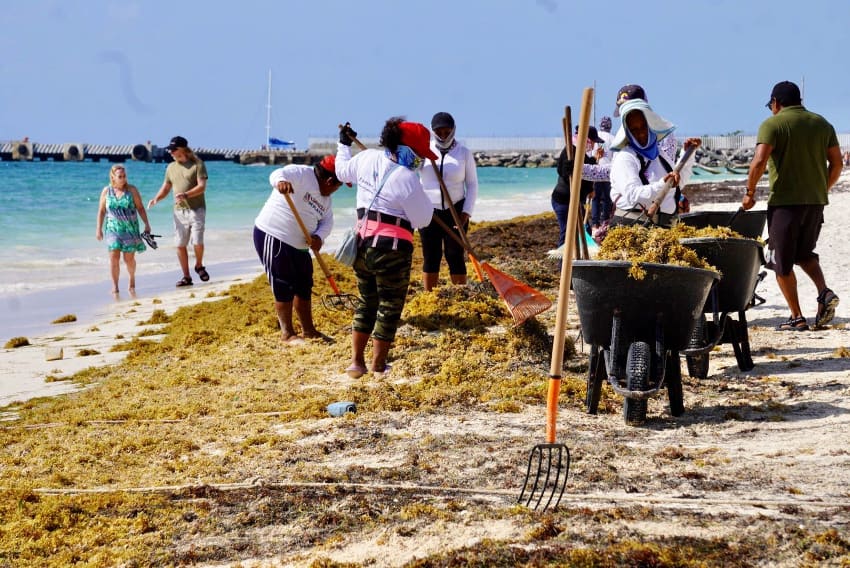
Sargassum is the one subject Tulum's coast does not get to avoid this time of year, and this week it drew the most serious response it has yet. On July 30, President Claudia Sheinbaum announced 768.7 million pesos in federal spending to intercept the algae offshore, the first stage of a program the Navy prices at 2.635 billion pesos across 2026 and 2027. Tulum is one of five priority corridors, alongside Cancun, Playa del Carmen, Puerto Morelos, and Mahahual. The entire logic of the plan is to catch the algae at sea before it reaches the sand.
It is worth talking about plainly, because sargassum is a real seasonal feature of this coast, and a buyer is better served knowing how it works than being shown only clear water. The encouraging part of the story is that the response has become substantial and well organized, and the science explains why this is a manageable season rather than a permanent condition.
That science is the place to start, because the mechanics of sargassum are what make it seasonal. Environment Secretary Alicia Barcena traced the surge to 2011, when a portion of the Sargasso Sea broke up and pushed the macroalgae into the tropical Atlantic. Currents carry it into the Caribbean on a seasonal cycle, which is why the heavy months cluster from spring into summer and why the coast clears again outside them. This is closer to weather than to a permanent change in the water. Barcena was candid that 2026 has been an unusually hard year, running four times heavier than 2025 and 27 times the historical average, and called it genuinely difficult and atypical. That frankness from the top is worth noting, because the funding scaled up to meet a bad year rather than to paper over it.
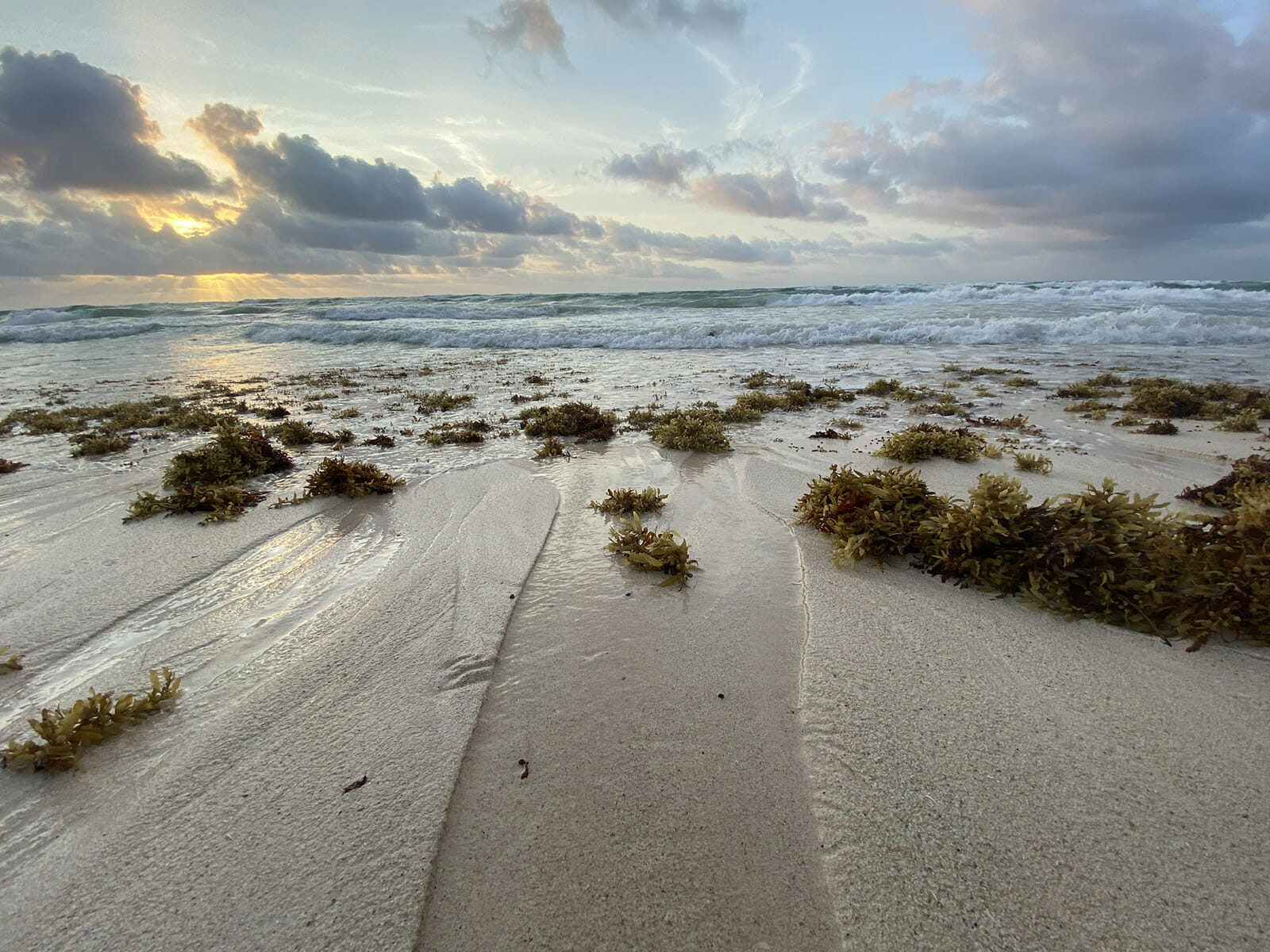
The scale of the season is easier to grasp in a single figure. Barcena said up to 90,538 tons of sargassum have floated off the Mexican Caribbean on a single day this year, against an average nearer 40,000 in other years. Around ten percent of that mass reaches the Quintana Roo coast, which works out to roughly 9,054 tons a day at peak. Semarnat recorded 92,782 tons collected across 2025, and the 2026 count already stands at 96,151 with the heaviest months not yet closed. These are large numbers, and the plan does not pretend otherwise.
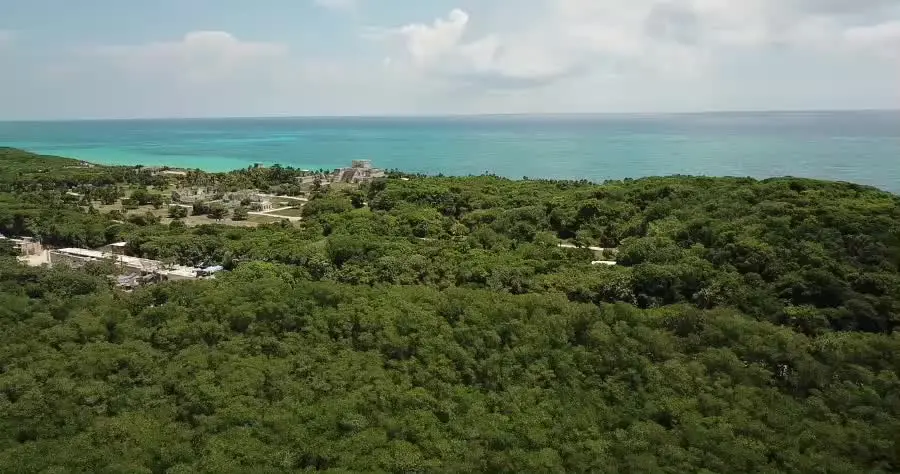
Where Tulum sits in that picture is better than the headlines suggest. Crews have pulled 10,943 tons off Tulum's municipal beaches this year, which ranks the municipality fifth among Quintana Roo's coastal areas, behind Playa del Carmen at 33,511 tons, Cancun at 21,669, Puerto Morelos at 11,574, and Othon P. Blanco at 10,945. Tulum's stretch of affected shoreline is a narrow one, part of the 40 to 50 kilometers across all five corridors that absorb most of the state's visitors and most of its cleanup budget. It is a concentrated problem on a concentrated piece of coast, which is part of why an offshore interception strategy has a real chance of working.
The capacity numbers show the direction of travel. Offshore collection has climbed from 627 tons a day at the start of the year to 1,227, with the first stage lifting that to 1,870 tons a day and the 2027 stage targeting 4,000. The purchase list behind those figures is concrete rather than aspirational: two specialized tugboats, six coastal vessels, 1.5 kilometers of dynamic barriers, and roughly 50 kilometers of coastal containment barrier deployed across the five corridors. As Navy Secretary Raymundo Pedro Morales put it, the intention is to reverse the trend and collect mainly at sea. There is a fair caveat to keep in view. Installed barrier coverage currently stands at about 9,800 meters, roughly 61 percent of what the state planned for this year, so the gap between announcement and full deployment is real and worth watching across the coming season.
.jpg)
Tulum has also had eyes on the problem longer than most visitors realize. Governor Mara Lezama said the state operates an environmental monitoring center that pulls imagery from ten European Space Agency satellites to track more than 140 beaches and forecast, day by day, where the algae will land. Her administration has spent more than 770 million pesos on the phenomenon since taking office, and she described interception before landfall as the most effective approach available. That daily forecasting is the practical tool most people never hear about. Beach conditions in Tulum are now predicted in advance, which means a resident or owner can know what a given morning looks like rather than gambling on it, and can plan around the heavy weeks the way one plans around a rainy season.
Anyone can do the same. Independent trackers now publish live conditions for the Riviera Maya, built on satellite data, beach webcams and daily reports. How Is The Sargassum keeps a running daily map and a seven day outlook, with a page dedicated to Tulum, so checking the coast before a trip or a viewing is now as routine as checking the weather.
There is a quieter economic story underneath the cleanup too. Sargassum pulled from the water has to dry before it can be handled, a step that removes the compounds that turn it toxic as it rots. Once the sand is separated and returned, what remains becomes an organic feedstock with real uses. Companies in Quintana Roo already turn it into compost, and Fonatur has pointed to firms producing biofertilizer, biochar, and biogas from the harvest, some of it exported for agricultural use. Fonatur's director, Sebastian Ramirez, also named the complaint hotel operators raise most, that lifting sargassum off a beach tends to lift the sand with it, and said the agency will document removal methods that preserve the beach itself. A nuisance is slowly being built into a small industry, which is the kind of structural response that tends to outlast a single bad season.

None of this erases the issue, and it should not be read as if it does. The point is the opposite. A buyer looking at Tulum should factor sargassum the way a buyer anywhere factors the real conditions of a place, with clear information rather than a blind spot. Some things are simply worth knowing before a purchase. The season is predictable and concentrated rather than constant. Beachfront and beach-adjacent properties experience it differently than inland ones. The beach clubs and hotels along the Boca Paila road manage it daily as a matter of routine. And the cenotes and the jungle side of Tulum, where much of the residential market actually sits, are unaffected by it entirely. A property's exposure is knowable, and it is a fair question to ask of any listing.
That is the case for treating the subject directly. The region is now spending billions to get ahead of sargassum, the science says it is seasonal rather than permanent, the forecasting is genuinely good, and the next fixed point on the calendar is an international sargassum conference Cancun hosts on October 1, which speaks to a region working to solve the problem rather than hide it. The broker worth trusting is the one who tells a buyer all of that before the sale rather than after. Tulum does not need the subject avoided. It needs it handled with the same seriousness the coast is finally bringing to the water.

We are the ultimate guide to invest in Tulum
Ultimate Guide to a profitable investment property in Tulum. Find homes for sale, condos or land and consult with an experienced real estate advisor.
Tulum News: Stay Updated on Real Estate, Lifestyle & Growth
Discover the latest updates from Tulum — from real estate trends and investment opportunities to lifestyle highlights and major infrastructure developments shaping the future of this vibrant destination.