New York's Luxury Machine Turns Toward Tulum
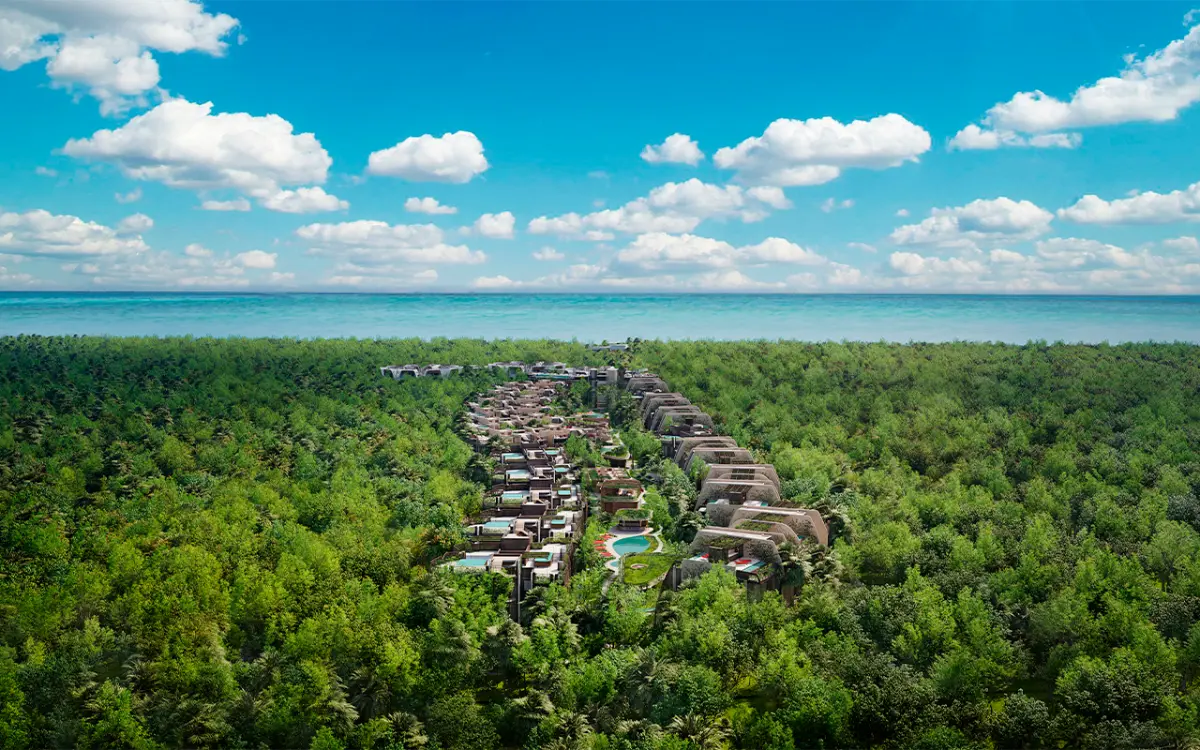


One of the clearer signals about where Tulum's luxury market is heading came this year from an unexpected direction: New York. Faena Tulum, the residential arm of the Faena brand, has partnered with Serhant, the Manhattan brokerage behind the Netflix series Owning Manhattan, to court high-net-worth buyers in the United States. It is the kind of alliance rarely seen from a Riviera Maya development, and it says something about the audience these residences are chasing.
Why a New York brokerage is the story
Founded in 2020, Serhant has grown to around a thousand agents and built its name marketing Manhattan and Hamptons trophy property to a global buyer pool, with a media operation most brokerages cannot match. Bringing that reach to a Tulum development is a deliberate choice about who the residences are for. It aims the project squarely at US buyers who already shop the established second-home markets, Miami, the Hamptons, Los Cabos, and asks them to add Tulum to that list. The account sits with the firm's Emanuele Fiore Team, which works New York, the Hamptons, and Miami, and the collaboration has been presented as an exclusive one covering a collection of 147 ultra-luxury residences. According to the developer, Alan Faena, architect Brandon Haw, and agents from the Owning Manhattan cast have run monthly presentations of the project in New York since October. From where we sit in the local market, the significance is less about one sales campaign and more about the audience being targeted and the standard of presentation now being brought to bear in Tulum.
Who is behind Faena
The Faena name carries weight that a first-time developer cannot buy. The brand was founded in 2000 by Argentine entrepreneur Alan Faena and investor Len Blavatnik, and it built its reputation by transforming districts rather than putting up single buildings. Faena District Miami Beach turned a stretch of the city into a cultural and hospitality destination anchored by the Faena Hotel, and the original Faena Hotel in Buenos Aires did something similar in the Puerto Madero docklands. That track record matters to a buyer, because it is the difference between a brand licensing its name and an operator with a history of running places to a standard for years. In Tulum the developer is Alan Faena in partnership with Inmobilia, one of Mexico's established developers, with the wider district run alongside Faena Hotels and the Accor group, and interiors by Faena Studio and Peter Mikic.
The project setting the tone
The development itself carries the message. Faena Tulum Residences is a limited collection of 147 homes ranging from one to three bedrooms, designed by architect Brandon Haw, set within the wider Faena District near Parque del Jaguar, roughly forty minutes from the Tulum airport, between the jungle and the Caribbean. Haw, London-born and trained at Skidmore, Owings and Merrill in New York before founding his own studio, looked to ancient Maya construction for the design, softening raw concrete with warm wood, chukum plaster, and burnt sienna screens that filter the light. Prices reported by the brokerages marketing the project start around 910,000 US dollars, with penthouses and larger residences well into the millions. The residences are under construction now, a point the developer draws against rival projects still at the rendering stage. The homes sit alongside the rest of the district, the Faena Hotel, the Faena Ocean Club on the shoreline, and the Tierra Santa Healing House. A branded residence of this kind sells on more than square metres. It sells on operator reputation, hospitality, and the confidence that the building will be run to a standard years after handover.
What it means for the premium tier
What matters for the wider market is not this one development but the direction it points. When a global luxury operator brings in a top-tier US brokerage specifically to reach Manhattan money, it is a bet that Tulum belongs on the same shortlist as the established second-home markets. That bet raises the ceiling for the whole premium segment. It sets a reference point for pricing and presentation that other high-end projects will be measured against, and it draws a class of buyer whose diligence tends to be thorough. The timing helps, with the new Tulum airport already shortening the trip for exactly the US buyer this project targets. In a market still working through oversupply at the lower tiers, activity at the very top is a useful signal, because branded, well-operated product is exactly the category that holds value through a correction.
How a buyer or seller should read it
For anyone watching the premium end of the market, the takeaway is that the top of Tulum is professionalising, and the gap between a well-run branded residence and an average villa is widening. High-end homes are increasingly judged on operator quality, management, and long-term running costs, not just the headline price. Owners are finding that presentation and positioning matter more, because the buyers arriving through channels like this expect a certain standard. The pool of serious capital looking at Tulum is widening, and the developments courting it are setting the bar.
We are the ultimate guide to invest in Tulum
Ultimate Guide to a profitable investment property in Tulum. Find homes for sale, condos or land and consult with an experienced real estate advisor.
Tulum News: Stay Updated on Real Estate, Lifestyle & Growth
Discover the latest updates from Tulum — from real estate trends and investment opportunities to lifestyle highlights and major infrastructure developments shaping the future of this vibrant destination.